
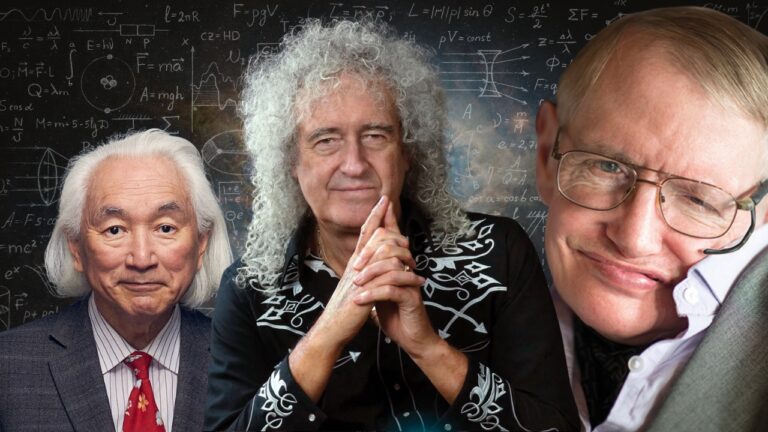
Celebrity culture usually rewards speed, charisma, and visibility. Physics rewards patience, abstraction, and years of hard problem-solving. When one person manages both, the result is genuinely interesting.
A physics education leaves marks that often stay visible long after graduation, in how someone explains ideas, builds a public persona, or moves through a second career.
A useful point comes first. A physics degree does not produce a single type of public figure. Some names below stayed close to research.
Some moved into music, comedy, or broadcasting. What links them is rigor. In every case, physics training was real, demanding, and central to the story, not a throwaway fact from an old bio.
A Quick Look
Celebrity
Field of Fame
Physics Study
Why It Matters
Brian May
Music
BSc in physics, later PhD work completed at Imperial
Serious academic return after global stardom
Brian Cox
TV, science, music
First-class physics degree and PhD in particle physics
Rare mix of pop culture and front-rank science communication
Maggie Aderin-Pocock
TV, science
Physics degree, later PhD
Turned technical training into public science literacy
Neil deGrasse Tyson
TV, books, media
BA in physics, PhD in astrophysics
Made astrophysics part of mainstream media
Michio Kaku
TV, books, media
Harvard physics degree, PhD in physics
Combined academic credentials with mass-audience reach
Dara Ó Briain
Comedy, TV
Studied mathematical physics
Analytical style shapes his comedy and science work
Helen Arney
Comedy, music, science communication
Physics degree from Imperial
Uses physics fluency in performance and writing
Stephen Hawking
Books, media, science celebrity
BA in physics, PhD in theoretical physics
Academic brilliance became a global public presence
1. Brian May
Brian May is the example most people know, and for good reason. Before Queen became one of the biggest rock bands on earth, May studied physics and mathematics at Imperial College London.
He later resumed doctoral work and completed a PhD connected to zodiacal dust, a topic in astrophysics that deals with interplanetary dust scattering sunlight through the Solar System. Imperial’s repository still hosts the thesis, a reminder that his academic life was not symbolic or honorary, but fully substantive.
Imperial’s repository still hosts the thesis, a reminder that his academic life was not symbolic or honorary, but fully substantive, shaped by the same culture of technical persistence that makes resources like Qui Si Risolve physical exercises useful to serious students.
What makes May especially compelling is timing. Plenty of famous people mention old academic interests. Far fewer return to advanced research after decades at the center of popular culture.
May did, and that choice says a great deal about the depth of his scientific commitment. His case also helps explain why the phrase “aced it” fits here.
Academic excellence did not disappear when music took over; it paused and then reappeared in a different stage of life.
2. Brian Cox
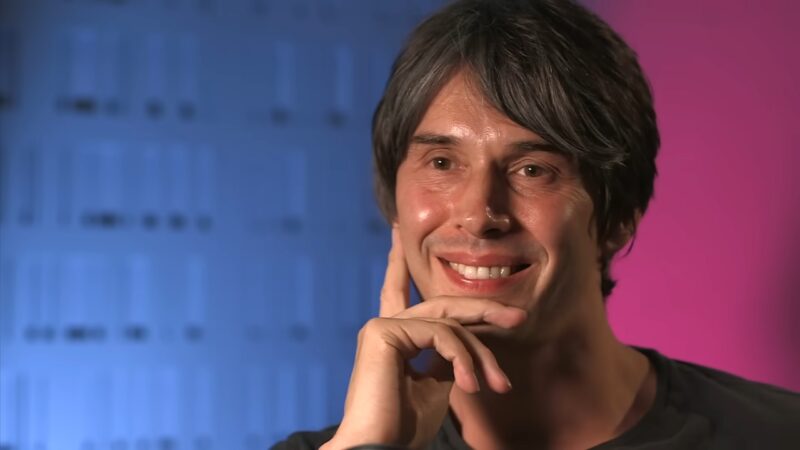
Brian Cox followed almost the reverse route. He first became visible in British music circles, then moved into a scientific career that carried him into lecture halls, laboratories, bestselling books, and major television series.
On his official site, Cox says he graduated with first-class honours and later completed a PhD in experimental particle physics in 1998.
Part of his public success comes from style. Cox explains very hard ideas without flattening them into nonsense. Plenty of presenters can create wonder.
Many fewer can do that while staying anchored to actual physics. A degree with top marks, followed by doctoral research, gave him authority. His later fame gave him reach.
Put together, he became one of the clearest cases of a physics-trained public intellectual crossing into celebrity territory without losing technical credibility.
3. Maggie Aderin-Pocock
View this post on Instagram
Maggie Aderin-Pocock has one of the strongest educational profiles on any list of science celebrities in the English-speaking world. Imperial identifies her as a physics graduate who later completed a PhD in mechanical engineering.
Her public career, including The Sky at Night and broader science communication work, rests on a foundation built inside laboratories and research environments, not only in studios.
Her career also shows what a physics education can do outside narrow academic pathways. Audiences respond to her because she brings authority without stiffness. She can discuss instrumentation, astronomy, engineering, and public engagement in one frame.
That range is common among physicists, especially people trained to move between theory, measurement, and systems thinking. In her case, it also helped produce a rare public identity: scientist, presenter, and trusted guide.
4. Neil deGrasse Tyson
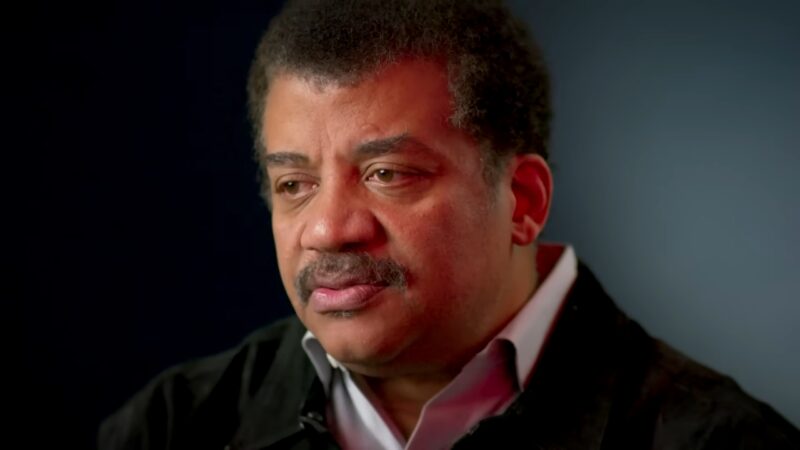
Neil deGrasse Tyson’s official profile notes a BA in Physics from Harvard and a PhD in Astrophysics from Columbia.
By itself, that is already a formidable academic route. What lifted him into celebrity status was his ability to bring cosmic subjects into mainstream media without making them feel remote or forbidding.
Tyson matters here because he represents a modern version of scientific celebrity. He is known to many people who have never opened an astrophysics textbook. Yet his public role still depends on rigorous training.
Physics gave him fluency in the language of the field, while media work gave him a global audience. A weaker academic background would have made that transition much harder, because popular science collapses quickly when the speaker cannot carry the underlying material.
5. Michio Kaku
@wired Professor of #theoreticalphysics #drmichiokaku simplifies the enigmatic world of #stringtheory #physics #physicsexplained #explains ♬ original sound – WIRED.COM
Michio Kaku earned a B.S. from Harvard, summa cum laude, and came first in his physics class before going on to a PhD at Berkeley. For a headline built around people who truly excelled, his record is hard to beat.
Kaku later became one of the most recognizable media figures associated with theoretical physics. His books, television appearances, and lectures helped turn highly abstract subjects into mainstream conversation.
Some readers know him from string theory discussions, others from futurist commentary. Either way, the intellectual core came first. Fame arrived later. In his case, celebrity did not replace academic achievement. It grew out of it.
6. Dara Ó Briain
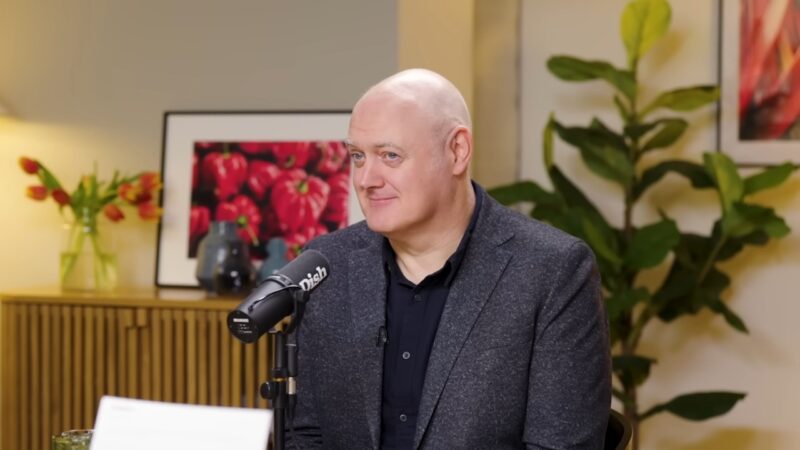
Dara Ó Briain studied Mathematical Physics at University College Dublin before moving into television and stand-up comedy. That academic route remains visible in how he talks, structures arguments, and plays with logic on stage.
His appeal comes partly from intellectual speed. He can spot weak reasoning quickly, build a joke around it, and still keep the room with him.
Science-themed broadcasting later became a natural fit for him because he already had the habits of mathematical and physical reasoning. A physics-related degree did not sit in the background as a forgotten footnote. It became part of the engine of his public voice.
7. Helen Arney
View this post on Instagram
Helen Arney is less globally famous than some names above, though in British science communication circles, she is well known and widely respected.
Her official biography says she has a degree in Physics from Imperial College London and a master’s degree in playwriting and screenwriting. That pairing almost explains her career by itself.
Arney’s work shows another route physics graduates sometimes take. Rather than leaving science behind, she folds it into performance, music, and writing.
Comedy built around scientific literacy can go wrong very fast when the performer is faking competence. Her work lands because the knowledge base is real. She knows where the joke is, and she knows where the science is. Both matter.
8. Stephen Hawking
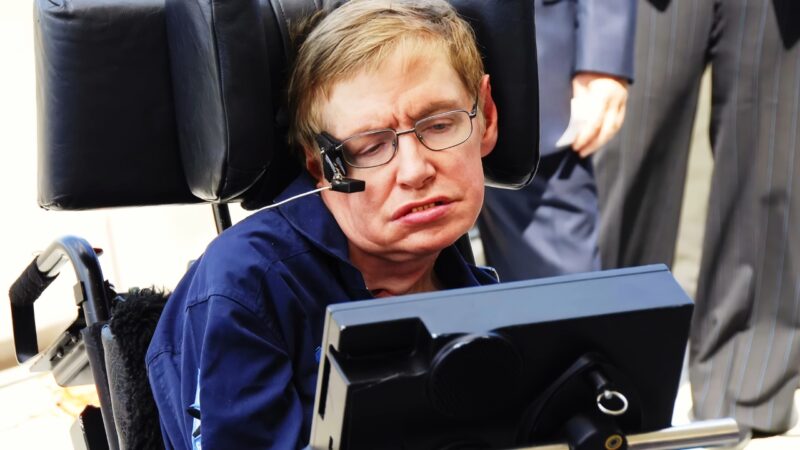
Stephen Hawking belongs on any list about famous people with serious physics credentials, even if “celebrity” feels too small a word for his public impact.
He studied physics at Oxford and later earned a PhD at Cambridge. Cambridge’s own material likewise traces the path from student interest in physics and astronomy to one of the most recognizable scientific lives of the modern era.
Hawking became a public figure partly because of his extraordinary scientific work, partly because of his books and media appearances, and partly because people saw in him a rare combination of intellect, resilience, and wit.
His presence on popular television, in documentaries, and in mass-market publishing made advanced physics feel culturally central in a way few scientists ever manage. Academic excellence was the foundation for all of it.
What All 8 Names Have in Common
A pattern appears across all 8 profiles. Physics gave each person a disciplined way of thinking, but it did not force one career script. One became a rock icon who returned to research.
One moved from music into particle physics. Some became flagship science communicators. Others pushed analytical thinking into comedy or performance.
Another shared trait is public trust. Audiences can usually sense when expertise is real. In an era crowded with shortcuts, branding, and flimsy authority, a genuine physics education still carries weight.
Numbers matter, methods matter, and intellectual endurance matters. Careers can branch in wildly different directions, yet serious training tends to keep showing up in the work.
Final Thoughts
Physics does not make people famous. It does, however, shape how some famous people think, speak, and build lasting careers.
Many of those same individuals also rank among celebrities with high IQ, which often reinforces their ability to turn complex knowledge into public influence.
Names on the list prove that hard science and public life are not separate worlds. Under the right conditions, one can strengthen the other.