
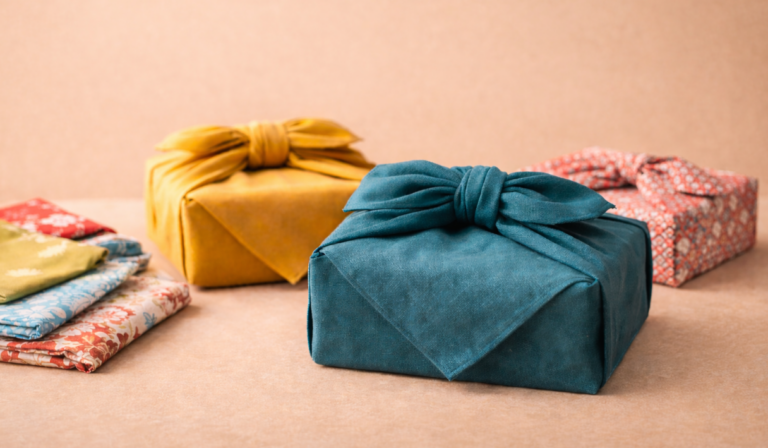
Furoshiki is a traditional Japanese wrapping cloth, usually square, used to wrap, carry, protect, and present items. The direct answer is that it is popular for gift wrapping because it does three things at once: it looks elegant, it reduces waste, and it turns the wrapping itself into part of the gift.
Unlike disposable paper that gets torn off and thrown away, a furoshiki can be reused as a scarf, storage cloth, lunch wrap, bottle carrier, tote substitute, or kept for future gifts.
That mix of beauty, practicality, and sustainability is the real reason people keep returning to it, especially at a time when many buyers want gifts to feel more thoughtful and less wasteful. Its roots go back centuries in Japan, with cloth wrapping documented as far back as the Nara period, and the practice has continued to evolve rather than disappear.
What Furoshiki Actually Is?
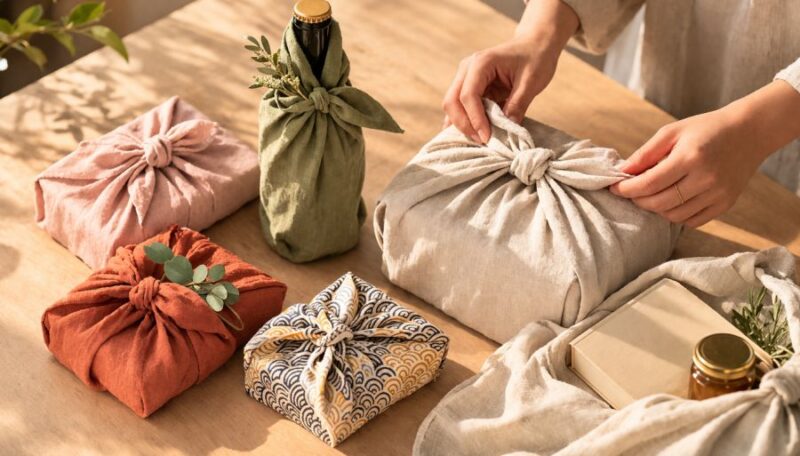
At the simplest level, furoshiki is a piece of cloth used instead of wrapping paper or a gift bag. That sounds almost too simple, but the appeal is in how adaptable it is. A single square of fabric can wrap a book, a box, a bottle, clothing, food, or oddly shaped handmade gifts with only a few folds and knots. The cloth can be cotton, silk, rayon, or synthetic blends, and different sizes work for different objects.
What makes furoshiki distinct is that the cloth is not just a covering. The tying method, the way the corners fall, the pattern placement, and the fabric texture all become part of the presentation.
That is why people who first encounter furoshiki often realize it feels different from modern gift wrapping. Wrapping paper usually hides the object until the moment it is torn open. Furoshiki, on the other hand, frames the gift. It creates anticipation without feeling disposable.
Even before the recipient unties it, the package already feels intentional. The folds suggest care. The knot looks handcrafted rather than mass-produced. The fabric has weight, softness, and texture, which immediately makes the gift feel warmer and more personal than something wrapped in glossy paper from a supermarket roll.
This tactile quality is a major part of its modern appeal.
The History Behind It
Furoshiki is not a trend invented for social media or modern eco-conscious shopping. The practice of wrapping objects in cloth in Japan is very old. Historical references trace cloth wrapping back to the Nara period, when valuables were protected in fabric.
Over time, these cloths evolved in purpose and meaning.
This history matters because it explains why furoshiki never belonged only to gift culture. It was always multifunctional. It protected valuables, organized belongings, transported items, and marked ownership. That practical background is one reason it still feels relevant today.
Many old customs survive only as ceremony, but furoshiki survived because it was useful. Even in its modern form, that usefulness remains obvious. A person can unwrap a gift and then use the fabric again the same day. That is much harder to say about standard wrapping paper, ribbon, tape, and laminated gift bags.
Why it Became so Popular Again?
Furoshiki declined in everyday use during the rise of cheap paper and plastic packaging, but interest has returned as people have become more conscious of waste and more interested in meaningful presentation. The environmental angle is one of the strongest drivers. Reusable cloth wrapping directly reduces single-use packaging.
But sustainability alone does not explain its popularity. Plenty of eco-friendly solutions never become desirable. Furoshiki works because it is visually beautiful as well. It feels elevated without being rigid. It can look minimalist, festive, artistic, luxurious, or earthy depending on the fabric.
A plain cotton square tied well can look understated and refined. A patterned cloth can feel celebratory without needing extra bows or metallic paper. In that sense, furoshiki fits modern taste very well. Many people want gifts to feel special, but they also want them to feel authentic rather than overpackaged. Furoshiki solves both problems in one move.
Another reason for its popularity is versatility.
One wrapping method can be used for a wide range of gift shapes. Bottles, books, candles, clothing boxes, handmade goods, skincare sets, and even food containers can all be wrapped with variations of the same idea. That flexibility makes it attractive for both personal gift giving and small brands that want presentation to feel memorable.
It is not hard to see why people who care about craft, design, and lasting materials are drawn to it.
Brands built around durability and everyday utility, such as Grainmark Leather, naturally sit well in that conversation because furoshiki reflects the same broader values: thoughtful design, tactile materials, and objects that are meant to be used rather than discarded.
Grainmark’s own brand language emphasizes full grain leather, craftsmanship, everyday function, and products made to last, which is exactly the kind of material culture where cloth wrapping feels natural instead of decorative for its own sake.
Why it Feels More Thoughtful Than Regular Gift Wrap
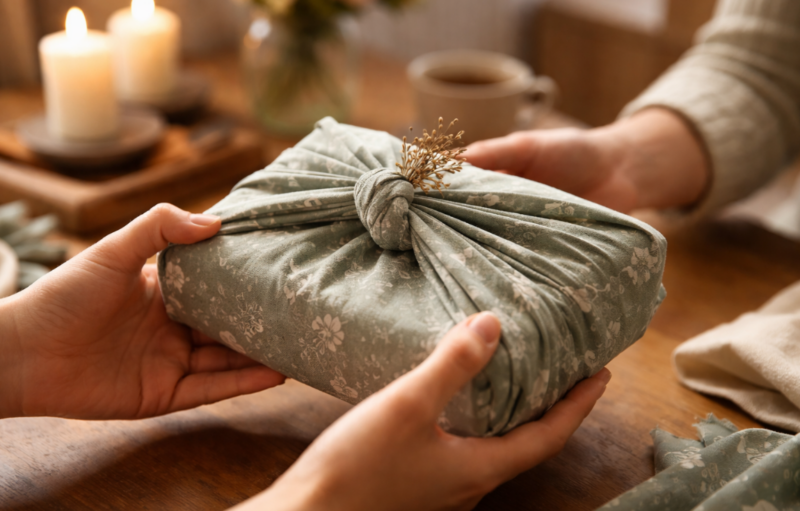
A big part of gift psychology is effort. People notice when a gift looks like it was handled with care. Furoshiki communicates that almost immediately. Someone had to choose the cloth, think about color and pattern, place the object correctly, and tie it in a way that works with the item’s shape. Even when the technique is simple, the result rarely looks generic. It looks considered.
That matters because the wrapping becomes part of the emotional experience. A standard gift bag often feels like packaging. Furoshiki feels closer to presentation. The person receiving it has to untie it rather than tear through it, which slows down the moment in a good way.
There is a kind of quiet ceremony to it. That small pause changes the rhythm of gift giving. It can make an ordinary object feel more valuable, not because the object itself changed, but because the act of giving it feels less disposable.
Practical Reasons People Choose Furoshiki
The modern popularity of furoshiki makes even more sense when the advantages are laid out clearly.
| Benefit | Why it matters for gift wrapping |
|---|---|
| Reusable | The wrapping does not become instant trash after opening. |
| Flexible | Works for boxes, bottles, books, and irregular shapes. |
| Attractive | Fabric texture and drape create a premium look. |
| Personal | Pattern and cloth choice can match the recipient or occasion. |
| Space-saving | Cloth folds flat and stores more easily than gift boxes or bags. |
| Multi-purpose | The recipient can reuse it as a wrap, organizer, bag, or accessory. |
These are not abstract benefits. They solve real frustrations people have with gift presentation. Paper tears, tape misaligns, corners wrinkle, bows flatten, and oddly shaped gifts are hard to wrap neatly.
Furoshiki handles many of those issues better because fabric moves with the object rather than fighting it. That is one reason beginners often find it easier than trying to wrap a bottle or soft item with traditional paper.
Official and educational sources also emphasize its adaptability to different sizes and shapes, which is central to its continuing relevance.
Furoshiki and The Wider Shift Toward Better Materials
There is also a broader design trend behind its popularity. More people are moving away from things that feel single-use, overproduced, or visually noisy. They are drawn instead to products and materials that age well, have texture, and carry a sense of permanence.
In gift culture, that means presentation is shifting too. Instead of the old model where wrapping is temporary and the product is permanent, furoshiki makes both parts feel worth keeping.
That is why it pairs especially well with gifts that already have a craftsmanship angle. Leather accessories, notebooks, ceramics, tea, handmade candles, fountain pens, and small personal goods all benefit from wrapping that does not feel cheap or throwaway.
A carefully tied cloth around a durable object tells a more coherent story than premium goods hidden inside disposable packaging. That is where furoshiki feels less like a wrapping trick and more like a design philosophy. It suggests that utility and beauty should live together.
Is Furoshiki Only for Japanese-style Gifts?
Not at all. While furoshiki is rooted in Japanese tradition, its modern use is much broader.
A neutral linen cloth can suit a minimalist Western gift. A bold patterned fabric can feel festive and contemporary. A darker heavyweight fabric can even make a men’s gift look more refined than shiny store-bought paper.
The important thing is respect for the tradition. Using furoshiki well does not mean stripping it of its background. It means appreciating that it comes from a long, practical, culturally rich wrapping tradition and applying it thoughtfully.
That is one reason articles, museums, and cultural organizations continue to explain its history alongside tutorials. The object is simple, but the cultural idea behind it is deep: wrapping is not just concealment, it is care, protection, and presentation.
What Makes a Good Furoshiki Gift Wrap Choice?
A good furoshiki is usually the one that matches the gift in both size and mood. Lightweight cotton works well for casual gifts and easy tying. Silk or smoother fabrics can feel more formal.
Larger cloths are useful for boxes and bundles, while medium sizes are often ideal for books, wallets, candles, or compact accessories. Pattern matters too. Traditional motifs can add symbolism, while plain or muted fabrics let the shape and knot do most of the visual work.
Sources that teach first-time users often stress size and fabric weight because they affect both appearance and ease of tying.
This is another reason the method has staying power. It can be simple for beginners and still leave room for skill and artistry.
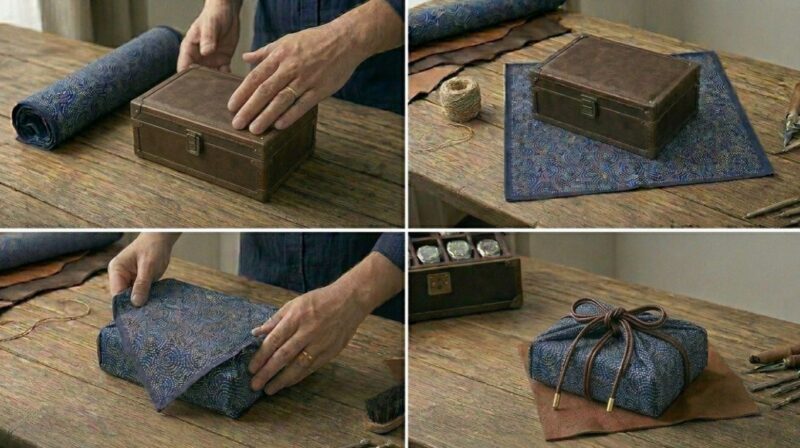
A first attempt can be just a square knot over a box. Later, the same person can learn bottle wraps, handle wraps, pleated finishes, or decorative knot styles. That learning curve makes furoshiki enjoyable, not intimidating. It is useful immediately, but it also rewards attention.
Bottom Line
Furoshiki is a traditional Japanese cloth used to wrap and carry items, and it is popular for gift wrapping because it combines elegance, reuse, flexibility, and meaning in one simple object. It turns wrapping from disposable packaging into a lasting part of the gift, which is why it resonates so strongly with modern preferences for sustainability, craftsmanship, and more thoughtful presentation.